



AI for business is the practical use of tools like ChatGPT, Claude and purpose-built assistants to help a growing company produce more content, faster support and quicker sales with the team it already has. This post covers the seven workflows where we see AI save the most time — content, proposals, support, translation, knowledge, reporting and SEO — with real numbers: proposals cut from 6 hours to 30 minutes, translation for £1,000 instead of £20,000+, and typical running costs of £300–£1,500 a month that pay for themselves within 1–2 weeks.
What is AI for business?
AI for business is no longer just for enterprise companies with big technology budgets.
So you've built your company with substance, revenue coming in from paying customers, teams you have built to get you where you are today.
But now you're facing a different kind of problem. You're past the startup phase where everyone wears five hats, but you're not corporate yet either. That means you can't afford departments for everything, but you're expected to deliver like the big companies do.
You need your team to work smarter, not harder — not with more people, just more efficiently.
What can AI actually do for your team?
The practical uses of AI for a growing team are the seven below: content, sales proposals, customer support, translation, knowledge organisation, meeting summaries and SEO. None of them are sci-fi; all of them are in use today.
Content generation & management
AI content generation is the quickest win for most marketing teams. Your team needs more content but you can't hire more people. Integrate AI into your workflow and it can generate first drafts of blog posts, product descriptions, email copy, and social media content. Your team reviews, refines, and publishes. Result: 3x the output, same team size.
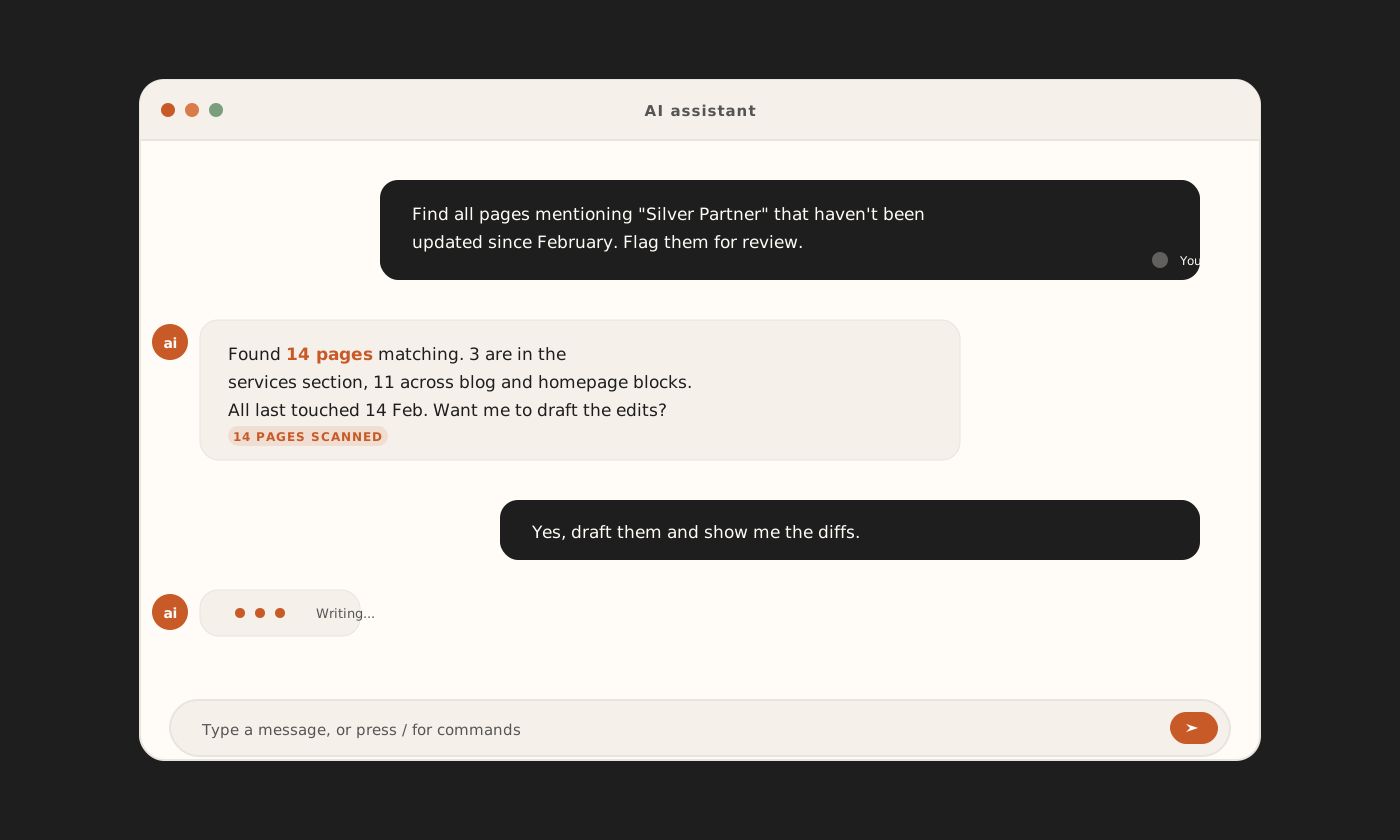
Tools like Eddi can handle this natively inside your Umbraco backoffice — your editors draft, refine, and publish without ever leaving the CMS.
Sales proposals
AI-generated proposals are tailored to each prospect and industry from your own templates and writing style — instead of your team building them from scratch. Sprinkle in your customer information, your sales team reviews and sends. Time per proposal drops from 6 hours to 30 minutes.
Customer support
AI support triage is the fastest way out of a drowning ticket queue. AI can handle initial triage, answer routine questions, and flag complex issues for humans. Your team responds to fewer repetitive questions and focuses on actual problem-solving. Customers get faster responses.
You can also use AI to make sense of complex customer queries and cut to the meat on the bone, quickly and accurately — a much more efficient use of your time, only dealing with the core issue and not the fluff around it.
Multi-language expansion
AI translation is now good enough to handle the initial pass into a new market; a light review from local team members ensures accuracy. You expand globally at a fraction of the cost of professional translation for everything.
Knowledge organisation
A searchable internal knowledge base is what your scattered company knowledge — the emails, documents, and people's heads it currently lives in — becomes with AI's help. Your team finds answers faster, common questions get answered quickly, new ideas form based on previously stored data, and new hires get up to speed quicker.
Meeting & report summarisation
AI summarisation is the difference between 2 hours of writing status updates and 10 minutes. Managers can easily spend hours writing updates and summarising meetings; AI automation can transcribe, summarise, and format them whilst they get on with other work.
SEO & website content
AI-assisted SEO is a realistic alternative to a dedicated SEO team: use it to analyse your content, suggest improvements, generate optimised meta descriptions, and recommend linking strategies. More organic traffic without hiring. SEO reports that used to take a couple of days on complex sites can now be done in less than an hour.
Eddi handles this as part of its core feature set — analysing your existing content, suggesting improvements, and helping your editors optimise pages directly inside Umbraco.
How does AI integration actually work?
AI integration is not sci-fi — it's available now and plugs into how your team already works. For Umbraco sites, that means AI built into the backoffice itself, not bolted on from the outside.
We start with an honest assessment of where your team loses the most time. Usually it's content production, support triage, or reporting. We connect the right AI tools to your Umbraco site and internal systems, start with one high-impact workflow, measure it, then expand from there. Your team learns as they go — it doesn't require formal training or a long onboarding process.
If you're an agency managing multiple Umbraco client sites, Eddi can become a premium service you add to retainers.
Our own product, Eddi, is built specifically for Umbraco sites — an AI assistant that lives inside the backoffice and helps your content team work faster without changing how they work. Find out more at eddi.im.
What results can you realistically expect?
The realistic results are 3–4x content output, support response times down from 18+ hours to 2, and proposal time cut from 4 hours to 30 minutes. The five examples below show how that plays out.
Example 1: Marketing team productivity
A 3-person marketing team is managing one post a month when one a week would be ideal — and can't hire more people.
With AI: Your team outlines topics in 30 minutes. AI generates 1,500-word first drafts. The team refines and publishes in an hour. Result: 4 posts per month instead of 1. Same team; the system pays for itself in one week through improved organic traffic.
Example 2: Support overload
A support team drowning in tickets is a familiar story: 50+ tickets daily, many of them repetitive questions, response time at 18+ hours, and staff and customers frustrated.
With AI: An intelligent system answers 60% of routine questions instantly via a chatbot. Your team gets tagged with the more complex issues. Response time drops to 2 hours for routine and same-day for complex. Customers are happier, your team is less burned out.
Example 3: Sales acceleration
Your sales team is spending 3–4 hours per deal building custom proposals from templates — frustrated with admin work instead of selling.
With AI: Your CRM feeds prospect data into an AI system that generates customised proposals based on your templates; sales reviews them and sends in 30 minutes. Time per proposal drops from 4 hours to 30 minutes. Your team closes more deals with the same effort.
Example 4: Global expansion
Entering Spanish and German markets is on the plan, but translating all your marketing materials would cost £20,000+ and take weeks.
With AI: Your existing English content gets AI-translated overnight. You hire a freelance translator in each market to review and adjust tone for £500 each. Cost: £1,000. Timeline: 3–4 days. You can test new markets without major investment.
Example 5: Content team using Eddi
Your marketing manager is maintaining a busy Umbraco site: writing new content, updating existing pages, and keeping SEO current takes most of their week, leaving little time for strategy.
With Eddi: They brief Eddi on a new page topic; it generates a draft using your existing content as context, suggests SEO improvements, and flags pages that need updating. The manager reviews and publishes. Output triples, and they get their week back.
How much does AI for business cost?
Typical AI costs for a mid-sized company are £300–£1,500 per month depending on usage, and that typically pays for itself in 1–2 weeks through time savings. You pay for the AI you use.
No need to hire more people
Growing companies are usually forced to scale headcount with output; AI breaks that link. As you grow, you don't need to proportionally increase your content, marketing, or support team. Your existing team handles more through AI-assisted workflows.
Cheaper than outsourcing
The outsourcing comparisons are the clearest way to see the saving:
- Translation: £1,000 in AI vs £20,000+ for a translator.
- Content creation: AI drafts plus your team vs hiring a copywriter.
- Support: AI handling routine questions vs hiring support staff.
Revenue impact
The revenue effects are cumulative: better content drives organic traffic, faster sales processes close more deals, better support reduces churn, and faster market entry opens new revenue streams. The efficiency gains compound.
When should you start?
The right time to start is when the efficiency demands of scale outgrow your team — which, for most growing companies, is now. AI won't be a magic solution, but it is a practical tool that frees your team to do higher-value work.
Two ways to get started:
- Try Eddi — our AI assistant built for Umbraco sites. Find out more at eddi.im.
- Talk to us — if you want a broader AI integration across your business systems, we're happy to have an honest conversation about what makes sense for your situation. Get in touch.
