



Codegarden 2026, Umbraco's annual conference held in Copenhagen, brought three announcements worth acting on: Umbraco Automate, a drag-and-drop automation engine built into the backoffice; a fully released AI Copilot with guardrails that keep humans in the loop; and the forthcoming Umbraco Editor MCP, which will connect Umbraco to AI tools like Claude and ChatGPT. Here is Simplepage's rundown of what was announced, what each piece means in practice, and where to start if you run an Umbraco site.
What is Codegarden?
Codegarden is the annual conference for the Umbraco CMS, organised by Umbraco HQ and held every June, where Umbraco developers from all over the world come together to meet others in the community, give talks about their experiences, and shape the future of the platform they love.
The first Codegarden took place in Copenhagen back in 2005 with just 23 attendees. Since then, the community has grown exponentially and so has the conference itself, now welcoming hundreds of attendees from all over the world. This year Codegarden returned to its roots, taking place in Copenhagen once again.
What is Umbraco Automate?
Umbraco Automate is a brand new drag-and-drop automation engine built natively into the Umbraco backoffice, and it was the headline announcement from the keynote. The workflows you previously had to wire up in external tools (such as n8n), or run manually, can now happen from where your content already lives.
In practical terms, this means things like welcome emails when a form is submitted, internal alerts when an order comes in, or discount codes triggered by a specific action, all without pulling in external sources. Think of it as your website starting to do more of the legwork for you.
What's reassuring for you is that unlike third party tools such as Zapier or Make, Automate runs entirely inside your own Umbraco infrastructure. Your data only leaves your environment when you choose to send it to an external service. It's automation on your terms.
Read more here: https://docs.umbraco.com/umbraco-automate
How is Umbraco keeping AI under your control?
Umbraco's approach to AI is deliberately human-in-the-loop: new guardrails inspect both prompts and AI output before or after generation, so content stays within branding and sensitive data stays protected. AI was, unsurprisingly, all over Codegarden this year, but that focus on control is what stood out.
For your content editors, there's now a fully released AI Copilot inside the backoffice. It supports speech to text dictation, drag and drop file uploads, and can work with more complex content structures, but always with a manual approval step, so an editor signs off before anything goes live.
This is great news for those who want to incorporate AI into their website but were put off by the security risks: the guardrails stop AI from doing what it shouldn't, pull it back if it starts to divert away from the task at hand, and overall streamline your AI. These guardrails are an incredibly important introduction to AI in Umbraco, and they are only the start.
The message from Umbraco HQ was clear: AI should make your team faster, not replace their judgement.
What is the Umbraco Editor MCP?
The Umbraco Editor MCP is a forthcoming connector that links Umbraco to AI tools like Claude or ChatGPT, letting editors use whichever AI client they already work with to act directly on their content.
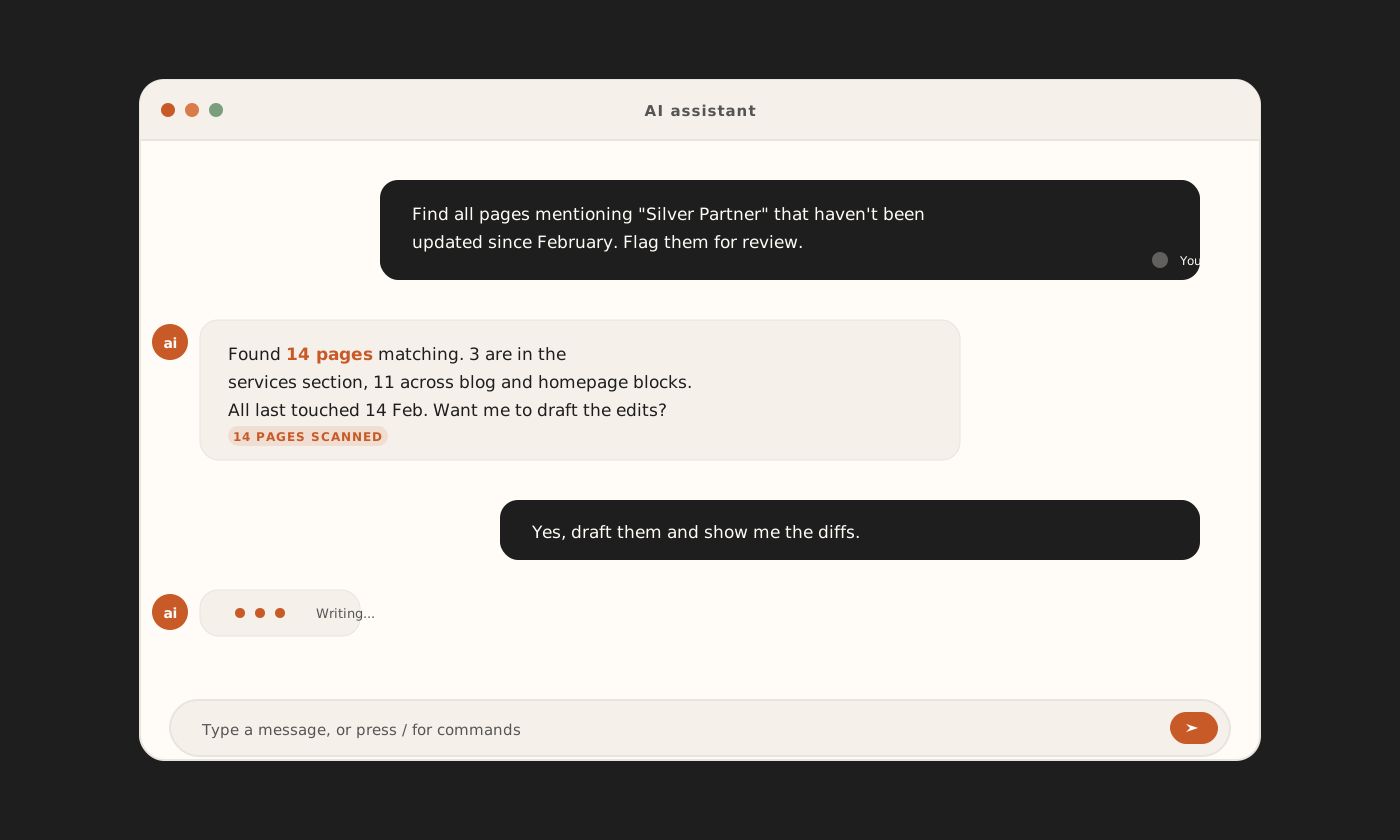
In plain terms: your team will be able to describe a content change in a chat window and have Umbraco carry it out. Rewrite this page to match our tone of voice. Generate meta descriptions across the whole site. Translate this section into French. All from a conversation, with Umbraco handling the work in the background.
For sites on Umbraco Cloud, there will be nothing to install. Each editor gets their own secure connection, and the existing approval workflow stays in place so nothing goes live without a sign-off.
It's early days, but the direction is clear. The CMS is becoming something your team can talk to.
Is Umbraco a safe long-term platform?
Umbraco is in good shape as a platform you can build on long term, and away from the new features, Codegarden was a reminder of exactly that.
Umbraco holds ISO 27001 certification, meaning its information security practices have been independently audited and verified. For clients in sectors where data handling matters, that is not a small thing. The Cloud platform carries a 100% SLA commitment, backed by a real service level agreement. And the G2 reviews reflect consistent high scores from the people actually using it day to day.
The platform has also been growing, with recurring revenue up more than 30% year on year. That kind of growth funds continued development, a better roadmap, and a platform that keeps pace with where the web is going.
Where should you start?
The quickest wins are usually the manual processes your team runs today that touch your website, and we're already working out how Automate in particular can be useful for clients who want their site doing more.
If Automate caught your eye, it's worth mapping out the manual processes your team runs today that touch your website. Form submissions, order confirmations, content approvals. Those are usually the quickest wins.
If AI is on your radar, the Copilot is live now and doesn't require any infrastructure changes to try. We can enable it and run a short session with your editors.
If the Editor MCP interests you, it's one to watch. We'll be keeping an eye on the Cloud release and will flag it when it's ready to trial.
That's the headline stuff from this year. If something here looks relevant to your setup, get in touch.